- The SAFE Leader Insights by Mark McBride-Wright
- Posts
- What If We Stopped Confusing Process Safety with Occupational Safety?
What If We Stopped Confusing Process Safety with Occupational Safety?
Why Understanding the Difference Between Occupational and Process Safety Could Save Thousands of Lives
Mark McBride-Wright
June 22, 2025
When Trish Kerin took to the stage at Safety on the Edge, her words didn’t just land, they reverberated.
I found myself nodding, wincing, even holding my breath at times. Because what she was describing, the repeated, catastrophic process safety failures we should have learned from, struck a nerve.
One line in particular stuck with me:
Sharing is nice and sharing is lovely, but sharing is not learning.
I’ve spent years working at the intersection of engineering and safety culture, but Trish’s keynote was a stark reminder: we’re still not drawing the line clearly enough between occupational safety and process safety, and people are dying because of it.
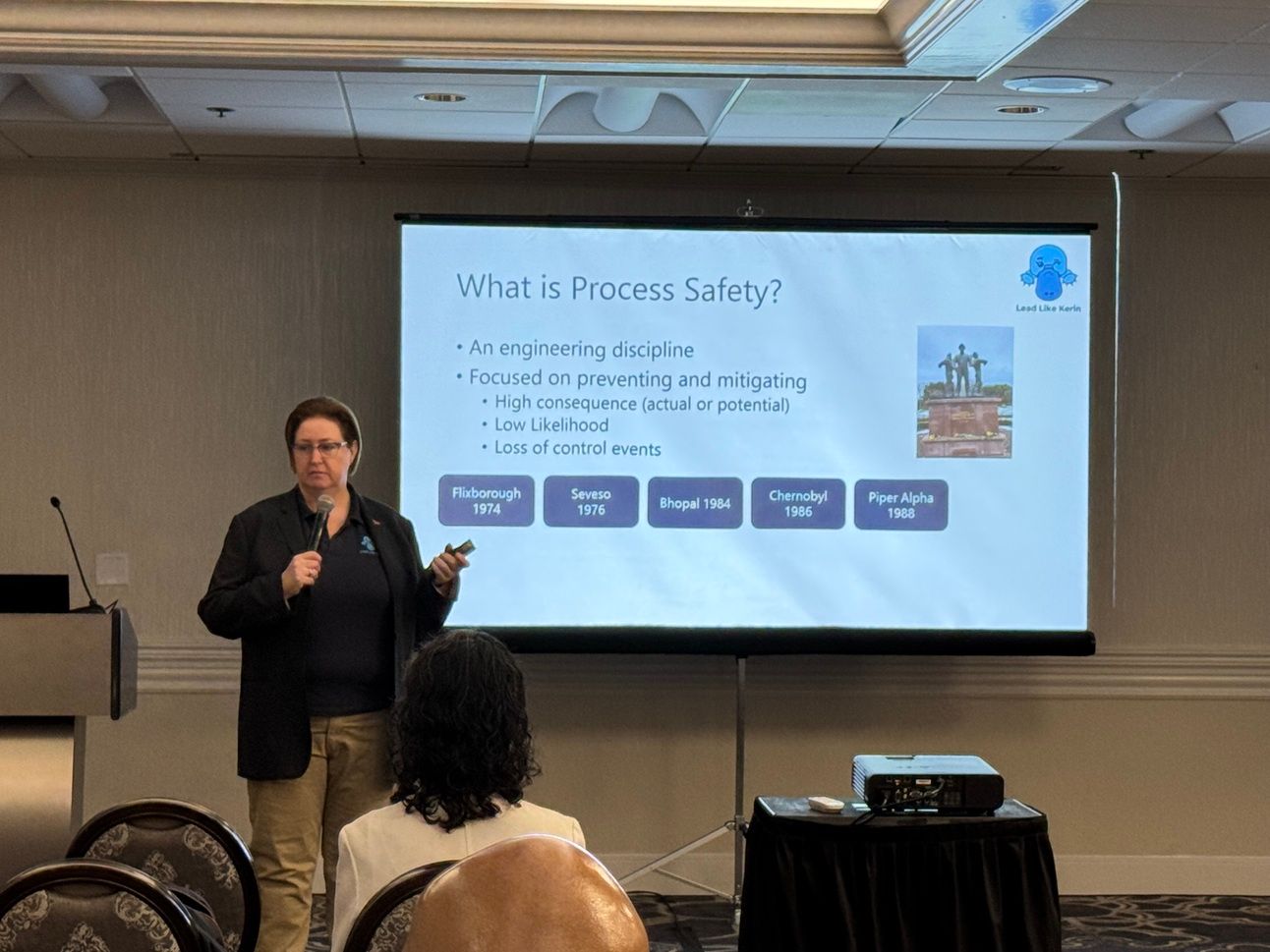
Trish Kerin at the start of her talk.x
Process safety ≠ occupational safety
One of the most compelling metaphors Trish shared came from Professor Andrew Hopkins:
You don’t judge the airworthiness of an airline by the number of back injuries suffered by its baggage handlers.
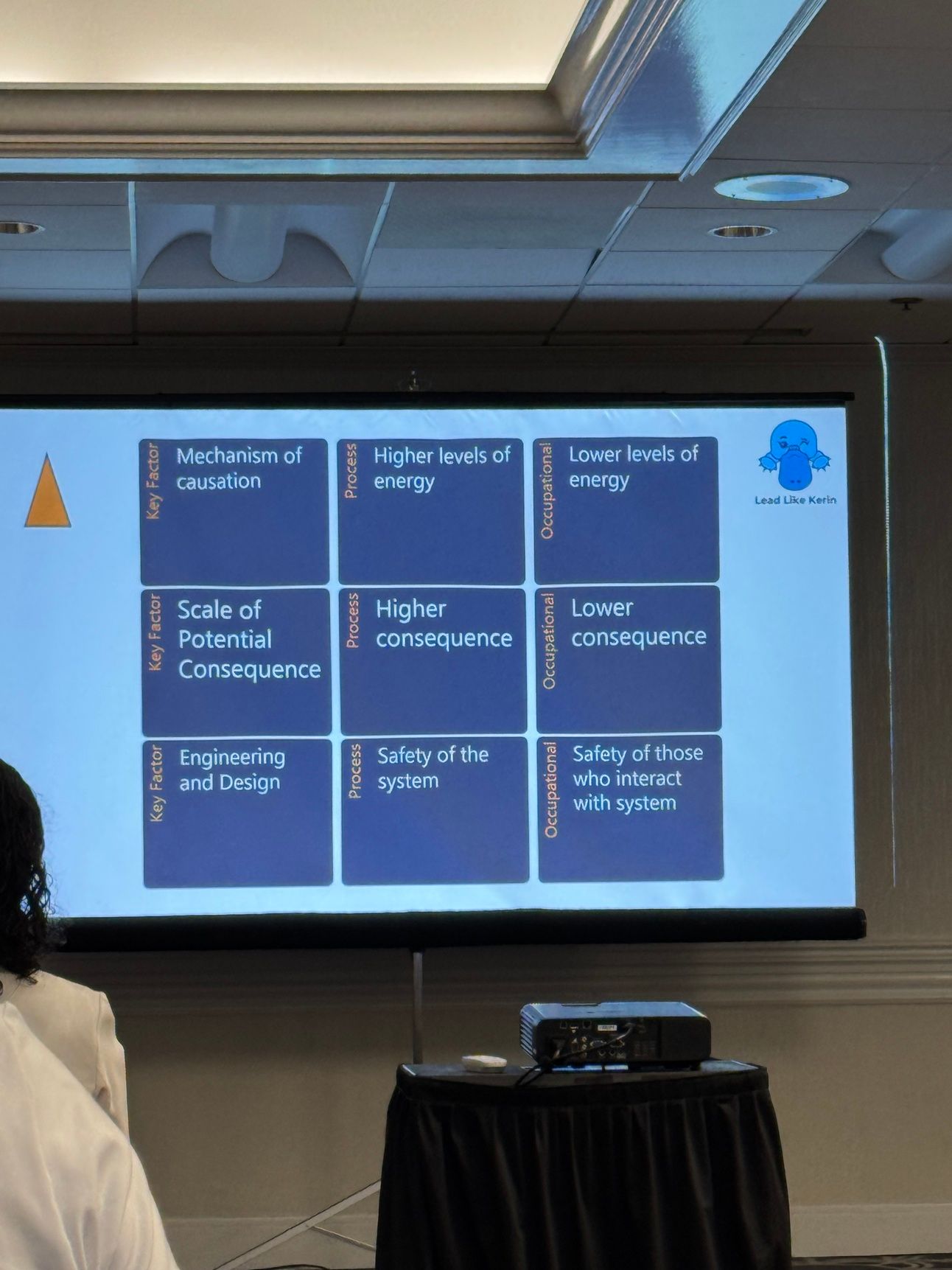
The same goes for engineering operations. Occupational safety is about slips, trips, falls. Process safety? That’s the systemic stuff. The explosions. The chemical releases. The mass casualty events.
As Trish put it:
We’re not trying to judge our process safety on the basis of occupational safety. That’s like comparing apples and aircraft.
History keeps repeating itself
Trish walked us through an unforgettable series of catastrophic events, Flixborough, Seveso, Bhopal, Chernobyl, Piper Alpha, Longford, Texas City, Macondo, Tianjin, Beirut, East Palestine.
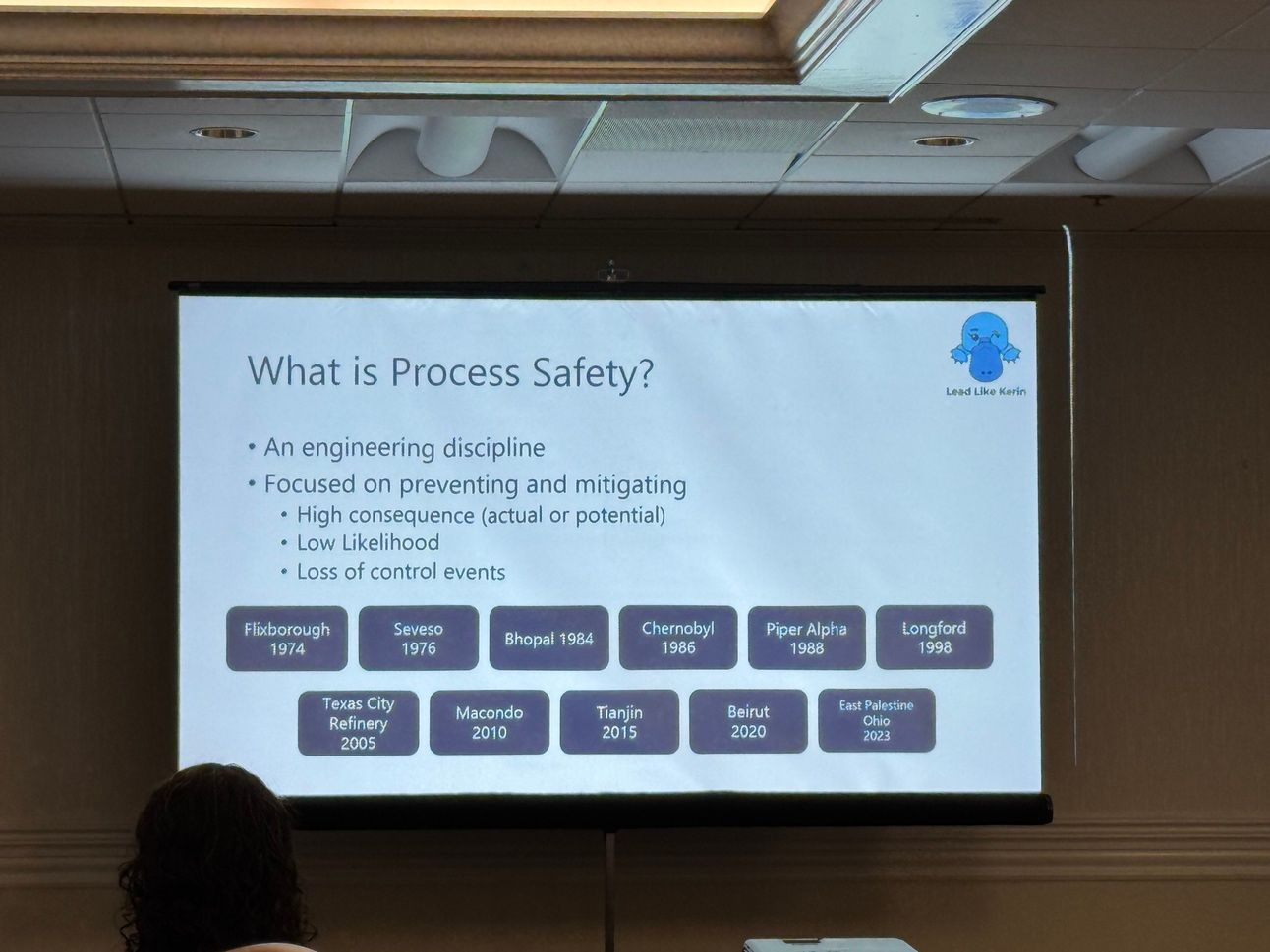
Some I knew well. Others I had heard of, but never fully appreciated.
Each one, a lesson ignored.
Each one, a chilling reminder of what happens when systems fail and warnings go unheeded.
Every one of those people died because of a process safety failure, and we’re still not learning.
Weak signals and the platypus philosophy
Trish’s metaphor of the platypus still makes me smile and think.
You might think you’re looking at a duck. But if it’s got a venomous spur and a beaver tail… you’re in trouble.
Her point?
There’s a platypus hiding in every facility. And if you don’t track it down, it’ll sting you.
That’s the nature of weak signals, the faint alarm, the strange smell, the shift in vibration. They’re subtle. But for those who’ve worked long enough in plant settings, you know when something feels off.
And that’s where curiosity becomes our best defence.
We must prime our teams to expect weak signals, to tune into them like a siren, not a whisper.
Stop pretending we’re learning
The most honest moment of Trish’s keynote came during the Q&A.
Someone asked, “Why do we keep having these incidents?”
Trish didn’t flinch.
Because we don’t actually learn. We think we do, but all we’re doing is sharing. Not embedding, not reflecting, not transforming.
We tick boxes. We circulate bulletins. But organisational learning, the kind that prevents recurrence, takes time. It takes systems. And it takes humility.
So what can we do?
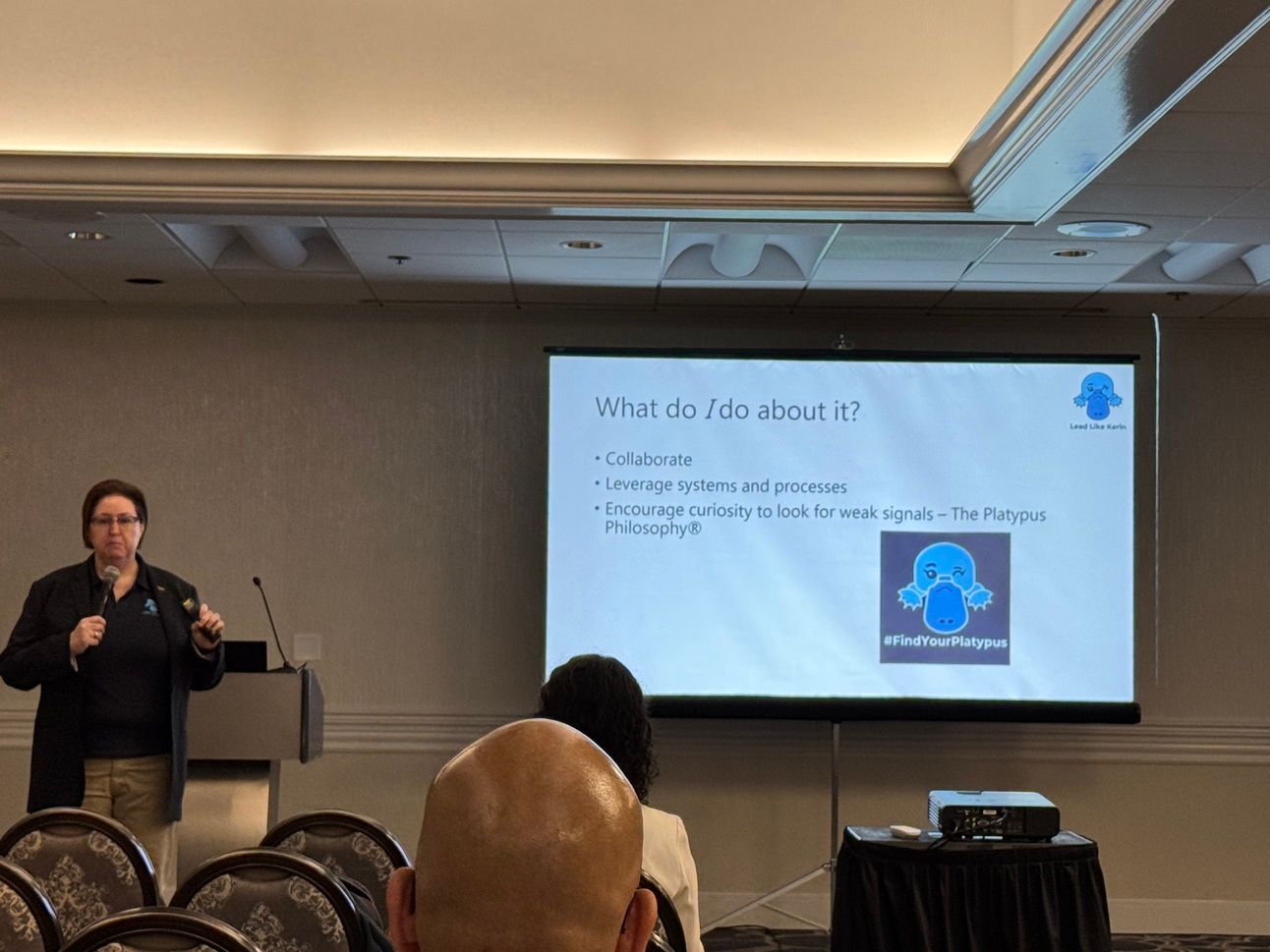
Here are three takeaways that stuck with me:
Differentiate safety disciplines clearly. Stop conflating injury rates with system integrity. They are not the same.
Foster a culture of curiosity. Encourage engineers to trust their instincts, reflect, and speak up about weak signals.
Build learning organisations. Reflection is not a luxury. It’s essential. We need to give space for teams to process what went wrong and what could have.
A final word from Trish
At the end of the day, we’re all here for safety’s sake. That’s why we do what we do. To keep people safe, not just workers, but entire communities.
For me, that was the emotional centre of the talk. It reminded me why I got into this work in the first place.
Let’s not waste another crisis.
See Mark in Action!
Curious about Mark McBride-Wright’s journey as a speaker and DEI leader? Watch his speaker reel and discover how he’s transforming industries through safe leadership and inclusion. |  |