- The SAFE Leader Insights by Mark McBride-Wright
- Posts
- What Happens When Safety Becomes a Scorecard
What Happens When Safety Becomes a Scorecard
What One CEO’s Story Reveals About Leading With Heart
Mark McBride-Wright
May 25, 2025
At Safety on the Edge in California, I witnessed one of the most powerful talks I’ve ever seen on leadership and safety culture.
Kim Greene, Chair, President & CEO of Georgia Power, walked onto that stage not to give a corporate presentation, but to tell the story of a company, and a leader, transforming in real time. It was a story not just of numbers and policies, but of heart, grief, and uncomfortable truth.
I call them my children. Not just because they’re my family and I feel responsible for them, but many of them are younger than my own children.
She was speaking about the lineworkers who climb power poles after hurricanes. The ones who face real risk. The ones she now sees not as employees, but as sons and daughters under her care.
This wasn’t just a keynote. It was a reckoning.

Kim Greene opening her talk ‘Leading the Charge‘
Target Zero
Greene took us back to 2003, when the company was facing recordable injuries and had just experienced four employee fatalities. The leadership response was swift: a rallying cry around Target Zero, zero injuries, zero incidents, zero tolerance.
We started telling people, if you just behave right, you’ll be safe.
It was behaviour-based safety, misunderstood and misapplied. Rewards were offered. Biscuits were handed out. If you kept your record clean, your team got fed.
Many of our employees were hurt. But did they tell anybody? Of course not. They didn’t want to wreck a biscuit breakfast for their group.
That line stopped me cold. Because how many times in engineering, in safety, in leadership, have we accidentally incentivised silence?
When Metrics Hide the Real Risk
By 2014, Greene was Chief Operating Officer, responsible for reporting safety performance to the board. The TRIR was dropping, on paper, things looked good. But serious injuries and fatalities weren’t budging.
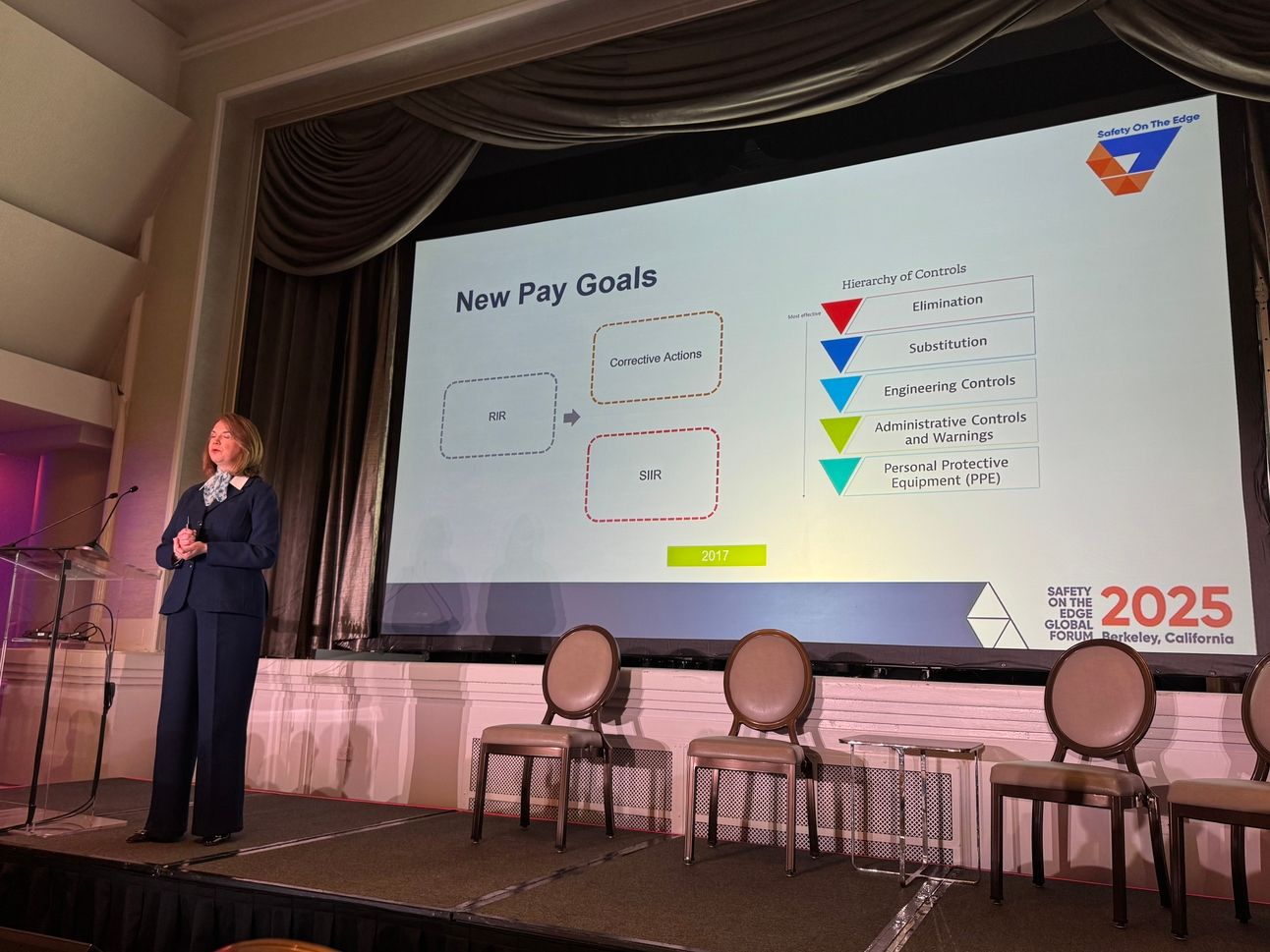
We were stamping out the small stuff. But people were still dying.
She called her former thesis advisor, now leading a master’s in safety engineering. What she heard back was sobering.
So began a long, humbling shift. From punishing behaviours to understanding risk. From compliance culture to a learning culture. From engineering out incidents to designing in safety.
Designing for Risk, Not Blame
That conversation led to a deeper cultural shift. The company stopped looking at safety as a matter of “correcting behaviour” and started focusing on building systems that anticipate human fallibility.
They adopted human performance tools, hierarchy of controls, and, crucially, a safety and health management system designed to outlast individual leaders.
We recognised we were focused on fixing the person, not the system, and not the culture.
One insight hit especially hard: employees weren’t even aware of the risks they were facing. Younger workers, in particular, often felt invincible. Many lacked the situational awareness that comes only from experience, and the system wasn’t helping them learn.
By putting structure around safety and moving toward critical risk training and organisational learning, they began shifting from reactive to proactive.
No More Manlifts
Greene shared one of the most telling stories of the transformation.
After returning to Southern Company, she noticed the continued use of manlifts, vertical conveyor-style platforms with a history of serious injuries. Curious, she asked if there had been any recent incidents.
About a month earlier, someone had fallen off a manlift. He wasn’t killed, but he never came back to work.
The next day, she banned them company-wide. The backlash was immediate. People complained about cost, logistics, inconvenience.
This was one of the most honest moments I’ve seen from a leader on stage. Not because it was heroic, but because it was human. Leadership isn’t about being popular. It’s about being accountable.

In the Eye of the Storm
Greene’s philosophy was put to the test during Hurricane Helene, the most devastating storm to hit Georgia. The pressure to restore power was enormous. Public officials were demanding speed. But her message to workers on the ground was unwavering.
I’ve got your back. If it takes you an extra day, takes you an extra five hours, I want you to be safe.
Half the restoration team were employees with less than five years on the job. She saw them as vulnerable, not expendable. She removed the pressure and gave them permission to act with care, not haste.
That’s a sentence every executive should sit with.
What This Means for All of Us
Kim Greene’s talk wasn’t just a case study. It was a challenge to all of us who care about safety, culture, and people.
It asked us:
What metrics are we still using that hide the real story?
What behaviours are we unintentionally rewarding?
And are we brave enough to lead in a way that trades popularity for impact?
Teach me. Teach us. We’re just getting started.
We are.
And if safety is truly about people, then maybe it’s time to stop chasing biscuits, and start building trust.
See Mark in Action!
Curious about Mark McBride-Wright’s journey as a speaker and DEI leader? Watch his speaker reel and discover how he’s transforming industries through safe leadership and inclusion. |  |