- The SAFE Leader Insights by Mark McBride-Wright
- Posts
- What a Lighthouse Taught Me About Leadership and Mental Health
What a Lighthouse Taught Me About Leadership and Mental Health
Why The Best Leaders Shine Brightest In The Storm

Mark McBride-Wright
October 09, 2025
A lighthouse doesn’t decide when to shine. It shows up, storm or calm.
That simple truth has been on my mind as we mark World Mental Health Day today. Because in many ways, leadership and mental health have more in common than we often admit. They are both about showing up consistently...not just for others, but for ourselves too.
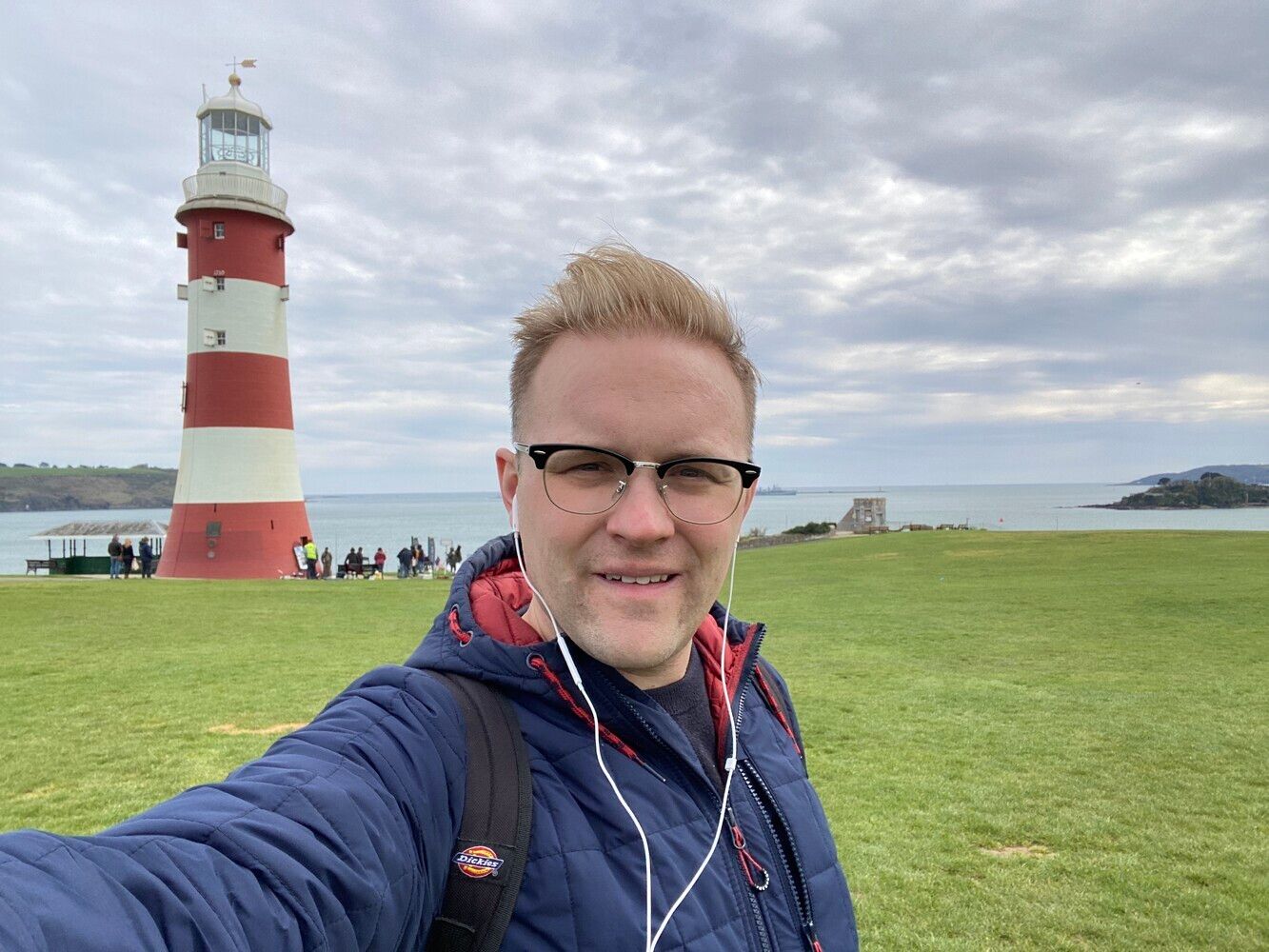
A photo of me by Smeaton's Tower lighthouse in Plymouth, United Kingdom
A moment by the sea
I still remember the first time I truly noticed a lighthouse. It wasn’t on a postcard or a glossy image, but in person. I stood on a windy coastline, staring at the solid tower. The clouds hung low. My mind imagined the stormy, arduous conditions it has endured through time. And yet there it stood — steady, unshaken, a beam which would sweep rhythmically across the horizon in the darkness.
The lighthouse didn’t care about the weather. It didn’t check whether anyone was watching. It simply does what it was built to do: shine. It struck me how powerful that would be next to it. No words. No drama. Just light.
Leadership without noise
I’ve often thought leadership is about vision, energy, strategy, or inspiration. And yes, those things matter. But the longer I’ve led teams and worked across industries, the more I’ve learned that some of the most profound acts of leadership aren’t loud or grand. They’re quiet.
They’re found in the moments when someone chooses to stand firm so others can find their way.
It’s the colleague who shows up every single day with integrity, even when no one’s clapping.
It’s the line manager who makes space for an honest conversation, without trying to solve everything.
It’s the mentor who sees your potential before you can see it yourself.
These people are lighthouses. They may not see themselves as leaders. But their steady light can help someone else navigate through fog, exhaustion, or doubt.
The storms we don’t always talk about
Mental health is often invisible. In engineering and technical fields, where I’ve spent most of my career, we talk a lot about physical safety — hard hats, goggles, checklists. But the biggest risks aren’t always the ones you can see.
I’ve spoken to engineers who felt crushed under the weight of unspoken expectations. I’ve listened to stories from men who didn’t feel they could admit they were struggling, because they thought leadership meant never showing weakness. I’ve worked with organisations where silence became the default, because talking about mental health felt uncomfortable.
Yet silence is its own kind of storm. It disorients. It isolates. It creates conditions where people lose sight of the shore.
Shining doesn’t mean being perfect
Here’s the thing about lighthouses. They don’t steer the ships. They don’t guarantee smooth seas. They just offer a point of reference. A way to orient yourself when everything else feels chaotic.
Leadership can be like that. It doesn’t mean having all the answers, fixing everything, or carrying everyone’s burdens. It can be as simple as being the one constant when everything else shifts. It can mean asking, “How are you, really?” and staying present for the answer. It can mean admitting you’re struggling too, and modelling what it looks like to be human and strong at the same time.
And perhaps most importantly, it can mean taking care of your own light. Lighthouses need maintenance. The lamp needs tending. The structure needs care to withstand the storm. Leaders are no different. Supporting others begins with supporting ourselves.
Why this matters today
World Mental Health Day is about making conversations around mental health as normal and routine as conversations about safety protocols or project plans. It’s about creating workplaces where asking for help isn’t seen as weakness but as part of how teams stay safe and strong.
In high-pressure environments, leadership isn’t always about heroics. More often, it’s about being that steady presence others can orient themselves around. And it’s also about making sure we have people around us who can do the same for us.
We can’t pour from an empty cup. And we can’t shine if our light has quietly gone out.
A moment of gratitude
Think about the people who have been lighthouses in your own journey. The ones who showed up when you needed them most. Maybe they didn’t fix everything. Maybe they didn’t even say much. But they were there, steady and bright, helping you find your way.
Today, take a moment to thank them. And if you’re in a leadership role — formal or not — remember that your light matters too.
It doesn’t have to be perfect. It just has to shine.
See Mark in Action!
Curious about Mark McBride-Wright’s journey as a speaker and DEI leader? Watch his speaker reel and discover how he’s transforming industries through safe leadership and inclusion. |  |