- The SAFE Leader Insights by Mark McBride-Wright
- Posts
- Not Safe Enough to Stay Silent
Not Safe Enough to Stay Silent
Lessons from Rodney Rocha on Speaking Truth in Safety-Critical Systems
Mark McBride-Wright
June 01, 2025
Rodney Rocha stood quietly at the front of the room, a humble presence with 50 years of engineering behind him, years marked not just by technical mastery, but by emotional wounds, hard-won wisdom, and a commitment to integrity that remains uncompromising.
This wasn’t just another conference keynote. It was a confession, a warning, and a call to action all at once.
I’ve been reprimanded. Accused of insubordination. Even had HR cases taken against me… And yet, the managers would say, ‘Rodney, when you do stuff like that, all work stops at NASA. We get embarrassed.’
In that moment, it became clear: this wasn’t about heroics or hindsight. It was about the cost of silence. The price of being right too early. And the reality that when systems fail, it’s often not because someone didn’t know, but because someone wasn’t heard.
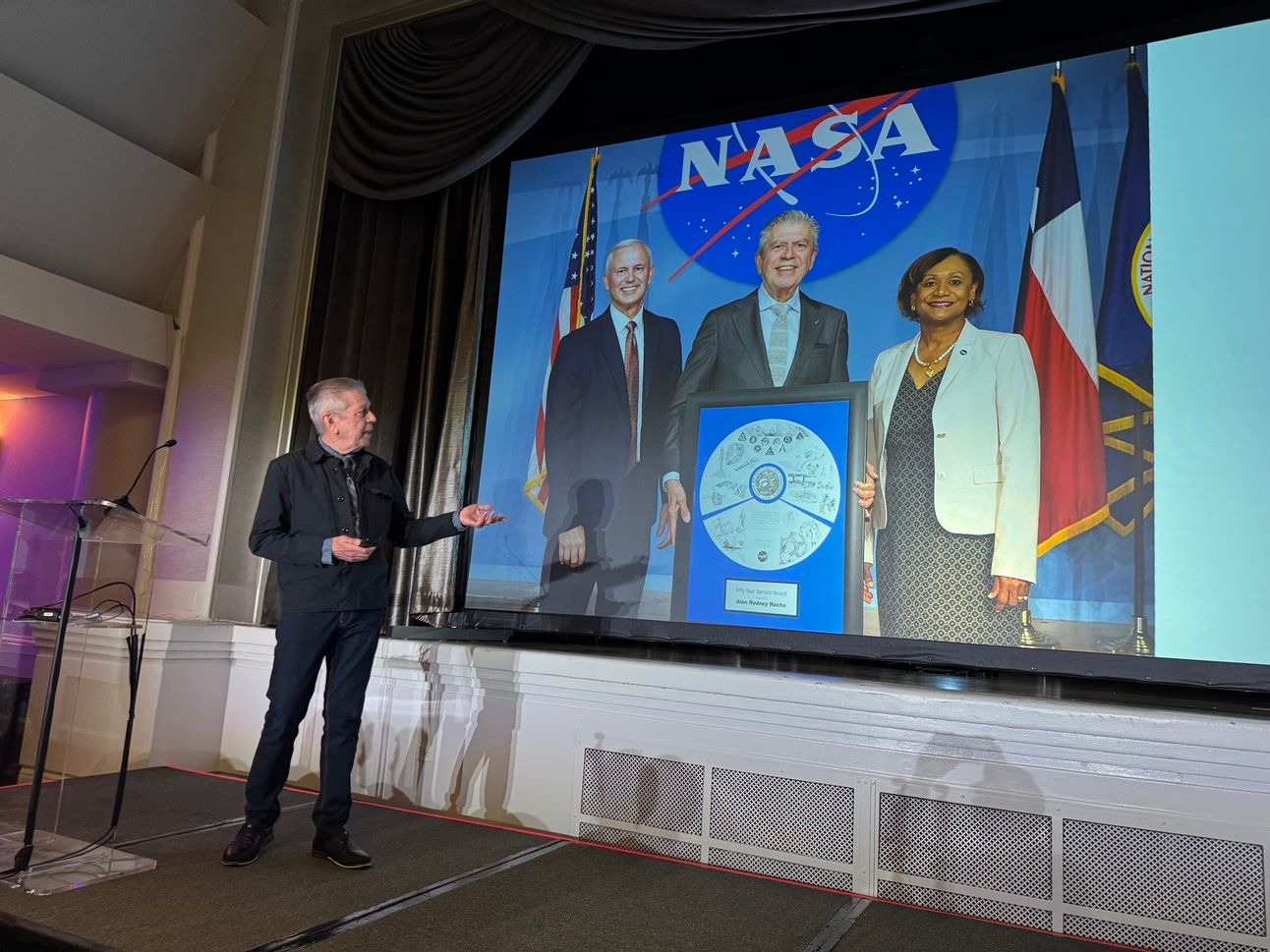
Rodney Rocha opening his talk.
The Myth of “Perfect Safety”
Rocha's keynote took us on a journey from the raw mechanics of Newtonian physics to the messy politics of institutional decision-making. In spaceflight, he reminded us, margins of safety are razor-thin by design.
You can’t build a spacecraft like you build a bridge with massive redundancies. Every kilo counts. That means you’re always operating at the edge of failure.
Yet that technical constraint, he warned, is often misused. When engineers express caution, they’re told they’ve padded their numbers. That there's always a secret margin tucked away.
How do they know that, without the data? They just assume we’ve got an ace up our sleeve.
This belief, that engineers are too conservative, that safety is always negotiable, was one of the cultural rot points Rocha identified. And it wasn’t abstract. He lived through the consequences.
Columbia: A System That Heard, Then Ignored
Rocha was part of the internal team that raised concerns about potential wing damage on the Columbia Shuttle, concerns that would later prove tragically prescient.
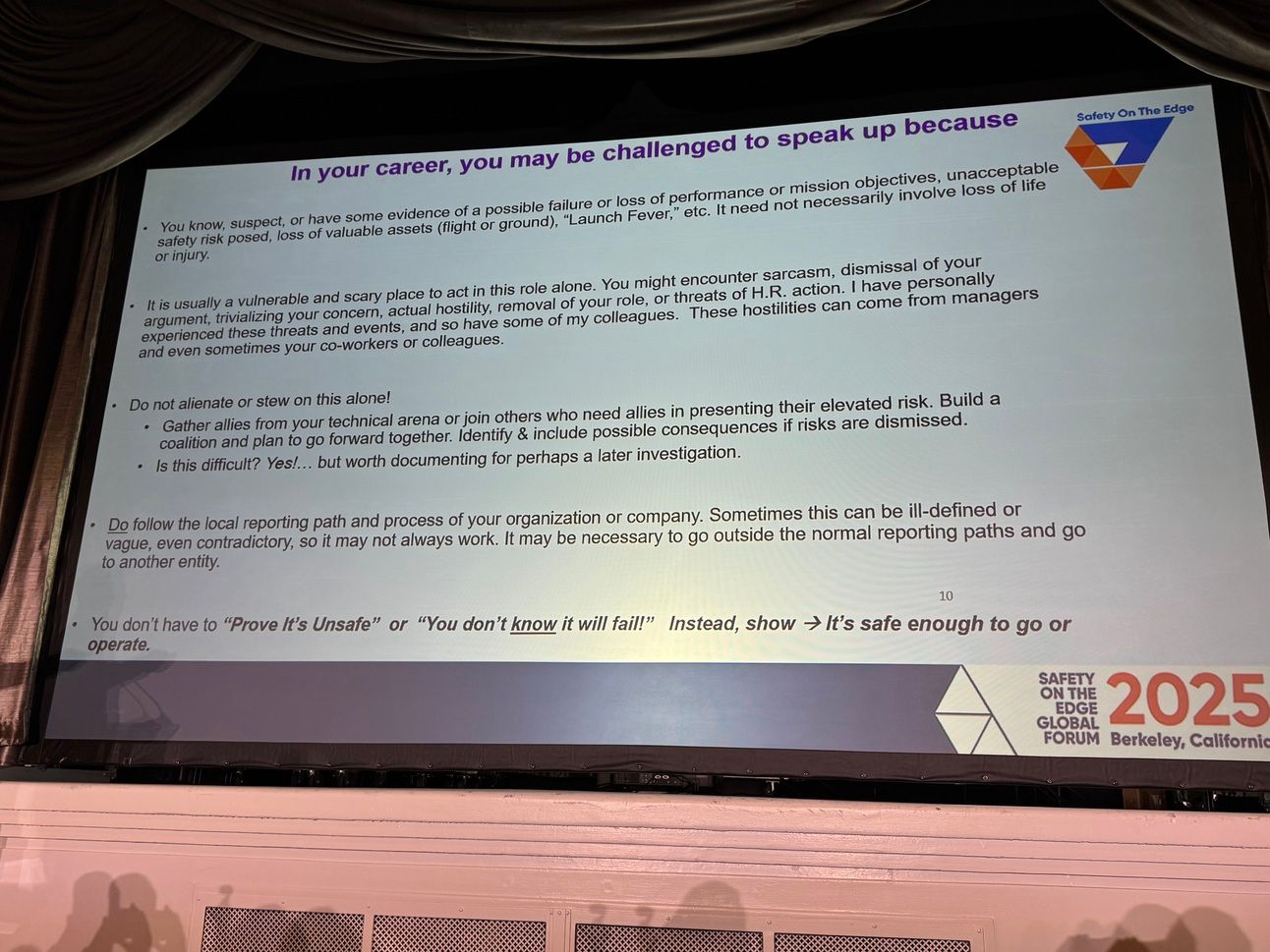
I asked for the photo that would’ve told us what we needed to know. I was the last person to ask. I’m often criticised: ‘Why didn’t you go further?’
His answer? The system wasn’t built to listen. Not really. Risk discussions were siloed. Meetings were pre-scripted. Protocols were more concerned with compliance than curiosity.
By the time it was clear something was wrong, it was too late. The crew perished. Only 20% of Columbia was ever recovered. Rocha visited the remains personally. “It broke me,” he said. “I crawled through that shuttle when it was first being built. It was my first assignment.”
Psychological Safety: The Missing Spec
What Rocha articulates better than most is the human cost of working in a system that punishes dissent. There are technical risks, yes, but also emotional ones.
I’ve seen good people retreat. They’re scared. They don’t want to be the one who fights. They think: maybe I’m wrong. Maybe I’m crazy.
His message wasn’t just for engineers, but for managers too:
You can’t just say, ‘Safety is our number one priority.’ You have to build a culture where safety concerns are actually heard. That means slowing down. Asking who’s staying silent. Waiting through the awkward pauses. Not assuming silence means consent.
Rocha acknowledged that not everyone is a natural Tiger, his word for the assertive individuals who instinctively challenge authority. Most of us need mentorship, coalitions, and emotional support to find our voice.
And if we’re lucky, someone to say: “You’re not imagining this. I’ve got your back.”
Normalisation of Deviation: The Invisible Enemy
Throughout the talk, Rocha returned again and again to a phrase we all know, but often underplay: the normalisation of deviance.
It’s like that noise in your car. You know something’s off. But it hasn’t broken yet. So you keep driving. It becomes familiar. You stop noticing it. That’s how accidents happen.
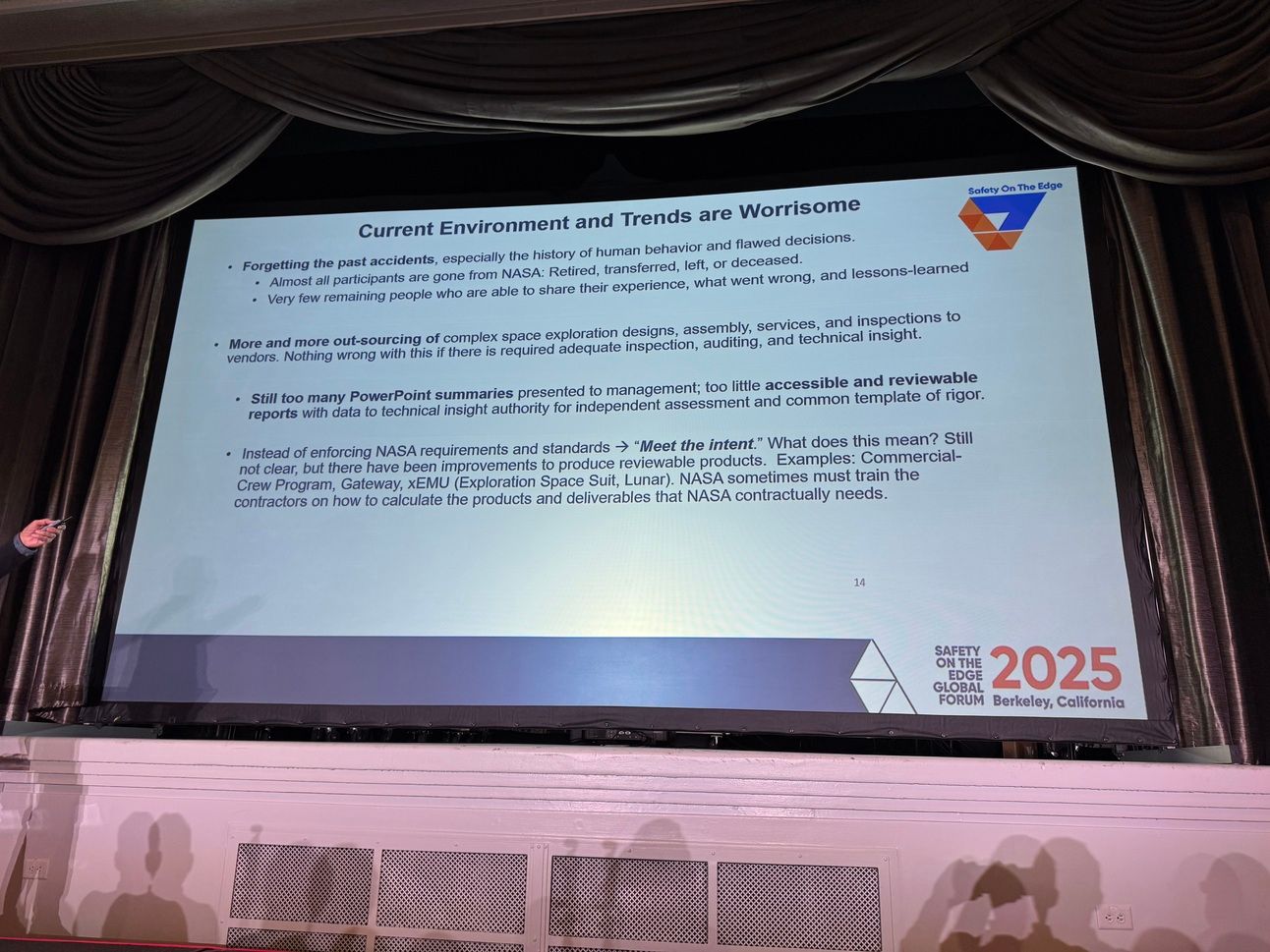
It’s a metaphor for the slow erosion of standards in the name of schedule, cost, or convenience. And it’s still happening, he warned, despite all the reforms post-Challenger and Columbia.
Too many risk assessments are presented via polished PowerPoints, stripped of the nuance engineers intended. Concerns get filtered and softened as they ascend the chain of command. The pyramid dulls the edges.
Speaking Up, Backed Up
What made Rocha’s talk especially powerful was his balance of realism and resolve. He wasn’t blaming individuals. He was showing how structures, incentives, and social norms converge to suppress dissent, even when lives are at stake.
He spoke about the emotional toll of doing the right thing, and being ignored.
The 37 of us on the Columbia debris assessment team… we never had another meeting. Management abandoned us. They just didn’t want to talk about it anymore.
That silence, he said, was the real failure. Not a broken wing. Not a flawed model. But a culture that forgot the humans inside the system.
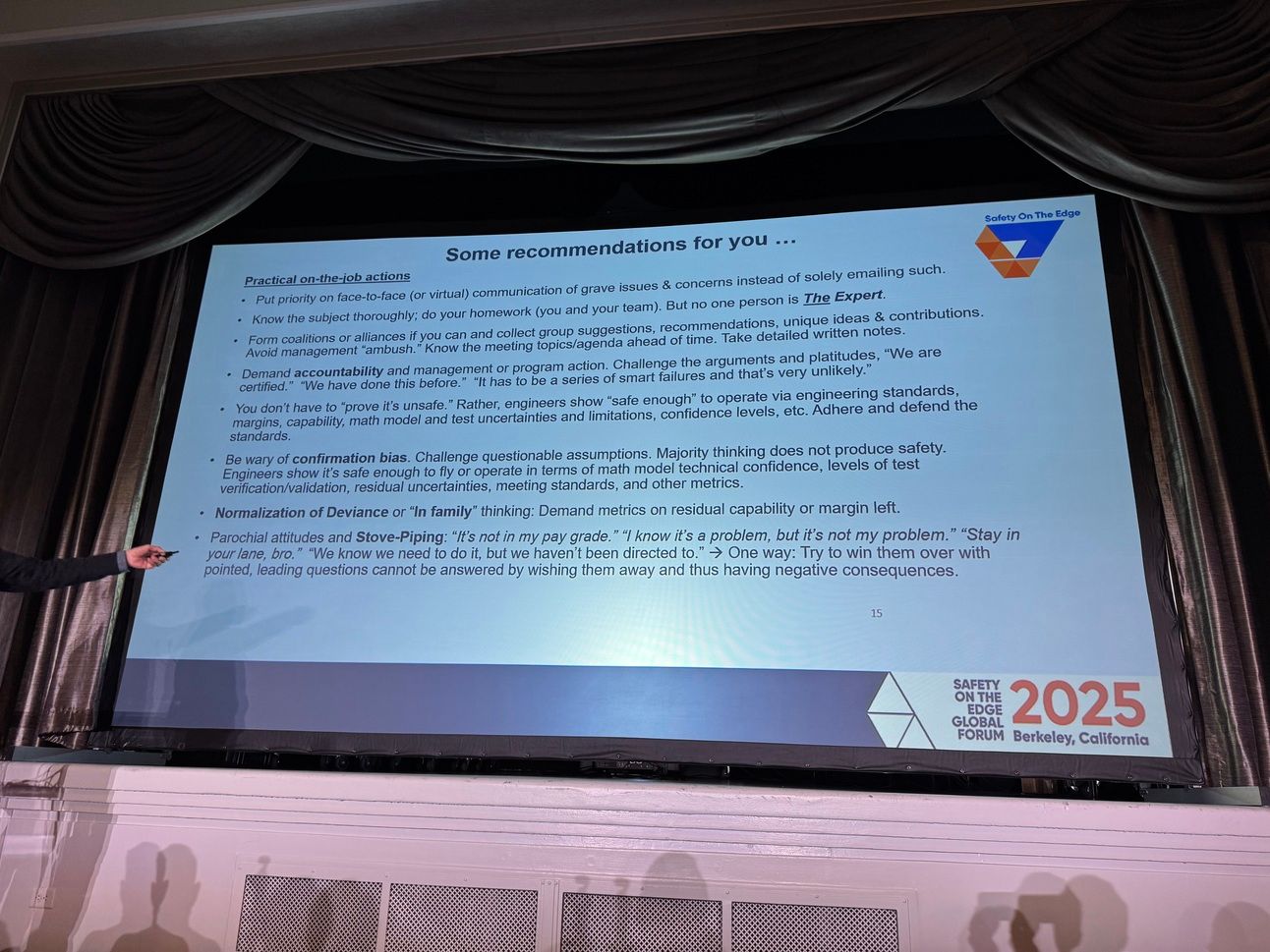
Recommendations from Rodney Rocha.
Rocha’s Closing Thought
Toward the end, someone asked Rocha how you know when something is “safe enough.” His answer, unsurprisingly, wasn’t binary.
You do the maths. You understand the margins. But you also look at the failure mode. Can we live with it? Can we get them home? If not—don’t launch.
But more than data, he said, it’s about being heard.
You don’t have to prove it’s unsafe. You just have to say: something’s not right. And be taken seriously.
As the applause faded, I thought back to something Rocha said early on:
I was too timid when I was young. Too scared. But I’ve learned. I won’t let it happen again.
Neither should we.
See Mark in Action!
Curious about Mark McBride-Wright’s journey as a speaker and DEI leader? Watch his speaker reel and discover how he’s transforming industries through safe leadership and inclusion. |  |