- The SAFE Leader Insights by Mark McBride-Wright
- Posts
- Lessons from Todd Conklin at Safety on the Edge
Lessons from Todd Conklin at Safety on the Edge
Why Redefining Success in Safety Means Shifting The Focus From Workers to Systems

Mark McBride-Wright
September 01, 2025
Back in May, I had the chance to hear Todd Conklin speak at Safety on the Edge in California. Todd is one of those rare figures in safety who can make you laugh out loud while also making you deeply uncomfortable with the way things are done. His keynote reminded me why his voice has been so influential in shaping modern thinking: he pushes us to stop tinkering at the edges and to fundamentally rethink how we define success in safety.
If we see safety as the absence of risk, we’re stupid, because none of the people who work for you see safety that way.
Todd began by challenging the very premise on which most organisations still measure safety: injury rates. He argued that this definition of success is flawed. Counting days without incident doesn’t tell us whether the system is actually capable of producing safe outcomes. It just tells us that, so far, we’ve been lucky.
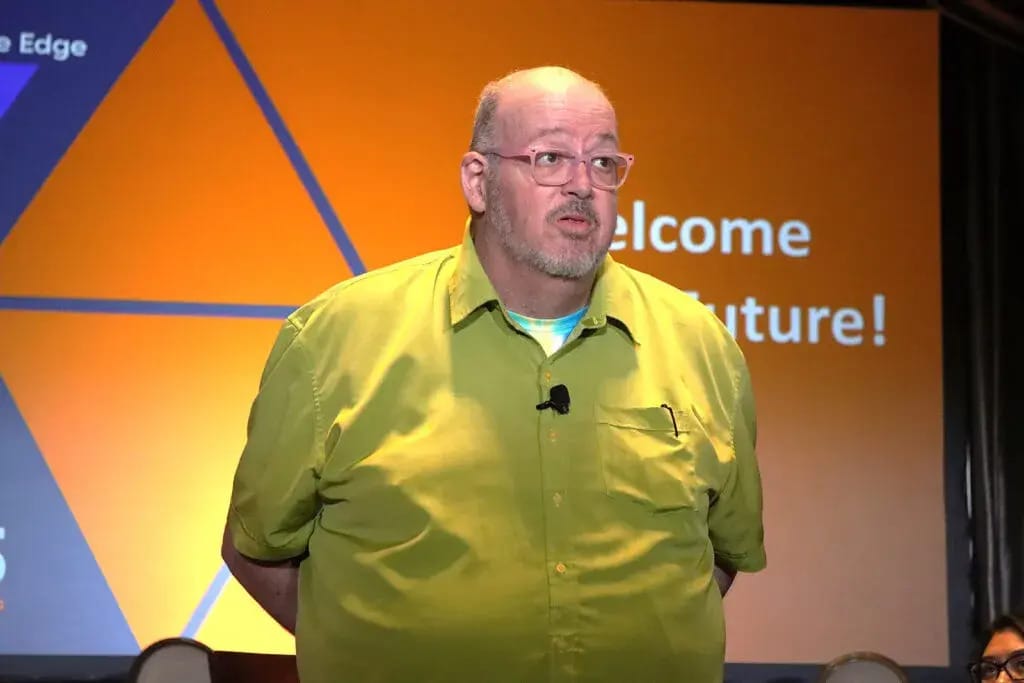
Stories that hit close to home
What makes Todd such an engaging speaker is his storytelling. He shared a series of incidents from his time at Los Alamos National Laboratory, incidents that on the surface looked like worker mistakes, but when examined more closely revealed organisational blind spots.
One story involved a contractor snagging a low-hanging power line with a dump truck. The immediate response? A stand-down, PowerPoint presentations, and stickers reminding drivers not to hit things above their vehicles. The outcome? A lot of time wasted, and very little learned.
A few weeks later, a recycling truck hit sprinkler heads under an awning outside the “brown palace” administration building. This time, the reaction was even more severe: the driver, spotter, and warehouse manager were all sacked. But again, nothing changed in the system that had created the conditions for failure.
Workers don’t make bad decisions. Workers are given bad decisions.
The most sobering part came when the same incident repeated just days later, another box truck, another sprinkler head, another flooded building. For Todd, the recurrence was proof that the organisation wasn’t bad at investigating, it was bad at learning.
Shifting the lens from workers to systems
Todd’s message was clear: if we want safer outcomes, we can’t keep pushing responsibility downwards onto workers. Workers will always make the best decision they can in the moment, with the information and tools available. Blaming them after the fact is not only unfair, it’s malpractice.
Instead, leaders need to look upstream at how operations are designed and managed. Safety improvement, Todd stressed, is a deliberate strategy. It doesn’t emerge from punishing people, or from issuing more rules. It emerges when organisations put their energy into strengthening controls, building resilience, and making operations more reliable.
Safety gets better because operations get more reliable.
This requires leaders to change the questions they ask. Too often, boards and executives want to know where risk is highest. But risk, Todd reminded us, is everywhere, it’s normal, dynamic, and always increasing. The better question is: where are controls weakest? That’s where leadership attention should be focused.
Practising new questions
One of Todd’s lighter, but insightful, suggestions was for leaders to practise asking better questions in everyday settings, like the supermarket checkout. After placing all your groceries on the belt, with toilet paper as the final item, look the cashier in the eye and ask:
Is that enough toilet paper for the amount of food I bought?
It’s a playful exercise, but the point is serious: leaders need to practise reframing questions in low-stakes environments, so they’re ready to do it when the stakes are high.
Why this matters for all of us
I came away from Todd’s talk with a sense of urgency and also a sense of hope. The urgency comes from recognising how easy it is for organisations to drift into asking the wrong questions, counting injury rates, blaming workers, mistaking activity for improvement. The hope comes from knowing that there is a better path, one that many in the safety community are already embracing.
Workers aren’t the problem. Workers are the solution.
For me, this is the heart of Todd’s message. If we continue to see workers as hazards to be controlled, we will miss the opportunity to harness their expertise. But if we see them as sources of insight, as partners in creating safer systems, then we can truly move safety forward.
Bad systems can succeed for a time because of good people, and good systems can fail despite our best efforts. Our role as leaders is to learn, adapt, and improve, not once, but continually. Because improvement, as Todd reminded us, is always a deliberate choice.
That is safety on the edge.
See Mark in Action!
Curious about Mark McBride-Wright’s journey as a speaker and DEI leader? Watch his speaker reel and discover how he’s transforming industries through safe leadership and inclusion. |  |